0 Comments

Learning how to clean your oven naturally is easier than you think, and you can get it sparkling clean with a simple paste made from baking soda and water. Just smear it inside your oven, let it work its magic overnight to dissolve all that baked-on gunk, and wipe it away the next day. Seriously—no harsh fumes, no endless scrubbing!
Why I Ditched Harsh Oven Cleaners for Good
I’ll never forget that overpowering chemical smell from commercial oven cleaners. I’d have every window in the house thrown open, fans blasting on high, and I’d still end up with a pounding headache. It just felt so wrong to be spraying those intense chemicals inside the very box where I cook for my family.
That feeling was my turning point. I knew there had to be a safer, more natural way to get the job done. My hunt for a better solution wasn’t just about dodging nasty fumes; it was about creating a kitchen that feels genuinely clean and safe, using ingredients I already have on hand.
My Natural Cleaning “Aha!” Moment
It turns out, a lot of people feel the same way I do. Many of you have told me you’ve also started looking for healthier, more natural ways to clean your homes. Like me, so many of you have discovered the simple power of pantry staples like baking soda and vinegar.
My own “aha!” moment came after a sweet potato casserole bubbled over and created a truly epic, burnt-on mess. I was skeptical, I’ll admit, but a thick baking soda paste and a little patience worked like a charm.
That’s when it really clicked: effective cleaning doesn’t have to come from a scary-looking aerosol can. Sometimes, the best solutions are the simple ones hiding in your cupboards.
Gathering Your Simple Cleaning Arsenal
Before we can roll up our sleeves and get to work, let’s get all our supplies ready. And here’s the best part—you probably have everything you need in your kitchen cabinets right now! Learning how to clean your oven naturally means no expensive specialty products are necessary.
We’re relying on the simple power of a few household staples. I always find that getting everything in one place first makes the entire process feel so much easier and more organized. No one wants to be rummaging through drawers with messy hands later on!

Your Natural Oven Cleaning Toolkit
Here’s a quick rundown of the simple, hardworking items we’ll be using. I’ve put them into a little table to make it easy to see what you need and why it works so well.
| Item | What It Does | My Quick Tip |
|---|---|---|
| Baking soda | Our star player! A mild abrasive that scrubs grime without scratching the oven’s surface. | Buy a big box just for cleaning—it’s super affordable and you’ll use it everywhere. |
| White vinegar | Its acidity cuts through grease and reacts with baking soda to lift stubborn messes. | I always keep a spray bottle of vinegar under my sink. It’s perfect for quick clean-ups. |
| Water | The simple binder we need to create our magic cleaning paste. | Just regular tap water is all you need. Nothing fancy here! |
| A small bowl | For mixing your paste. | Any cereal bowl will do the trick. |
| Spatula or paintbrush | Perfect for spreading the paste evenly, especially in those hard-to-reach corners. | A cheap silicone spatula from the dollar store is my go-to for this job. |
| Damp cloths & a scraper | For the final wipe-down and tackling any really tough, baked-on spots. | An old credit card or a plastic pan scraper works wonders and won’t damage the enamel. |
See? Nothing too complicated. These are the basics that get the job done beautifully without any of the harsh fumes you get from commercial cleaners.
I’ve always found that the most effective solutions are often the simplest. It’s why I’ve come to rely on so many of my own homemade cleaning product recipes for just about every room in the house
My Go-To Method for a Sparkling Clean Oven
Alright, are you ready to tackle that grimy oven? I’m going to walk you through my simple, foolproof process for getting your oven to sparkle again. This is the exact method I use in my own kitchen, and it has never let me down, even after a few casserole-related disasters!
First things first, make sure your oven is completely cool. Then, pull everything out—the racks, your pizza stone, and that forgotten thermometer tucked in the back. We’ll get to the racks later, I promise! For now, we just want a nice, empty space to work in.

Whip Up and Apply the Magic Paste
Our secret weapon here is a simple but mighty paste made from baking soda and water. It’s surprisingly effective.
More Ideas You'll Love

In a small bowl, mix about a half cup of baking soda with a few tablespoons of water. You’ll want to stir it up, adding a little more water as you go, until you get a consistency like a thick, spreadable paste. Think something that will stick to the oven walls without dripping all over the place.
Now it’s time to get your hands dirty! Using a silicone spatula or even just your gloved fingers, start slathering that paste all over the inside of your oven. Don’t be shy! Make sure you cover the bottom, sides, and the back wall, but do your best to avoid the actual heating elements.
A little trick I’ve learned is to use an old paintbrush for the awkward back corners. It works wonders for getting the paste into every nook and cranny without you having to practically climb inside the oven!

Let Patience (and a Little Fizz) Do the Work
This next part is the most important—and also the easiest! Once your oven is completely coated, just close the door and let the paste sit for at least 12 hours. Overnight is even better.
This is where the real work happens. The alkaline nature of the baking soda gently works to break down all that greasy, baked-on grime without any effort from you. It’s pretty amazing.
The next morning, grab a damp cloth and start wiping out the dried paste. You’ll be shocked at how much gunk comes away with it!
For any stubborn spots that are still hanging on, it’s time for the grand finale. Pour some plain white vinegar into a spray bottle and spritz it over any leftover baking soda residue. You’ll get a satisfying little fizzing reaction as the vinegar and baking soda work together to lift that last bit of grime. It’s honestly one of my favorite parts of cleaning with vinegar because you can actually see it working.
After the fizzing dies down, give the oven one final wipe with your damp cloth to clear out all the paste and loosened dirt. And that’s it! You’ve got a sparkling clean oven without any harsh chemicals or intense scrubbing.

Tackling Tough Spots and the Oven Door
Sometimes, that simple baking soda paste just isn’t quite enough for those truly stubborn messes. We all have them—the ghost of a pie that bubbled over, or the cheese that dripped off a pizza and became a permanent, rock-hard resident on the oven floor.
For these extra-tough spots, you’ll need a little more persuasion. After you’ve wiped away most of the paste, don’t grab a metal scraper! You’ll scratch the enamel for sure. Instead, reach for a non-abrasive scouring pad or my personal favorite trick: an old plastic gift card. You’d be surprised how well the edge works to gently chip away at the burnt bits without doing any damage.
More Ideas You'll Love

Making the Oven Glass Sparkle
Now, the oven door glass is a whole different beast. It’s usually not caked with food, but it gets covered in a greasy, brown film that makes it impossible to see what you’re baking. I use a slightly different approach here.
My secret for the glass is a much thicker version of the baking soda paste. You want it to have some real staying power so it clings to the vertical surface instead of sliding right off.
- Start with about 1/4 cup of baking soda and add just a teaspoon or two of water.
- Mix it up until you get a dense paste, something like the consistency of toothpaste.
- Spread this thick paste all over the inside of the glass door.
- Now, walk away. Let it sit for at least 30 minutes—an hour is even better. This gives the baking soda time to work its magic and break down all that baked-on grease.
- When you come back, just wipe it away with a clean, damp cloth. A few little circular motions will buff the glass beautifully.
This little trick cuts right through that greasy film, leaving your oven door so clear you can finally watch your cookies turn that perfect golden brown again! It’s a small detail, but it makes the whole oven feel brand new.

Sometimes the grime isn’t just on the surface but has dripped down between the panes of glass. If that’s the case for you, don’t worry—I’ve figured out an easy way to clean between the glass on your oven door to get it looking pristine.
Keeping Your Oven Cleaner for Longer
After all that effort to get your oven sparkling clean, the last thing you want is for it to get grimy again right away! A little bit of prevention really does go a long way and makes your next deep clean so much easier.
Think of it as spending a few minutes now to save yourself hours of scrubbing later.
One of the simplest tricks is to get into the habit of wiping up spills as soon as the oven has cooled down. A quick once-over with a damp cloth prevents those little drips from becoming rock-hard, baked-on messes. This is just one of many small habits that can keep your kitchen clean while you cook, saving you a ton of time and stress down the road.
Easy Maintenance Habits
To really stay ahead of the game, I have a couple of go-to strategies that make a huge difference. These are simple, quick tasks that keep buildup from ever getting out of hand.
- Try an Oven Liner: A reusable silicone or non-stick oven liner on the bottom rack is a lifesaver for catching drips from bubbling pies or cheesy casseroles. Just be sure to place it on a rack, not directly on the oven floor, so you don’t block the airflow.
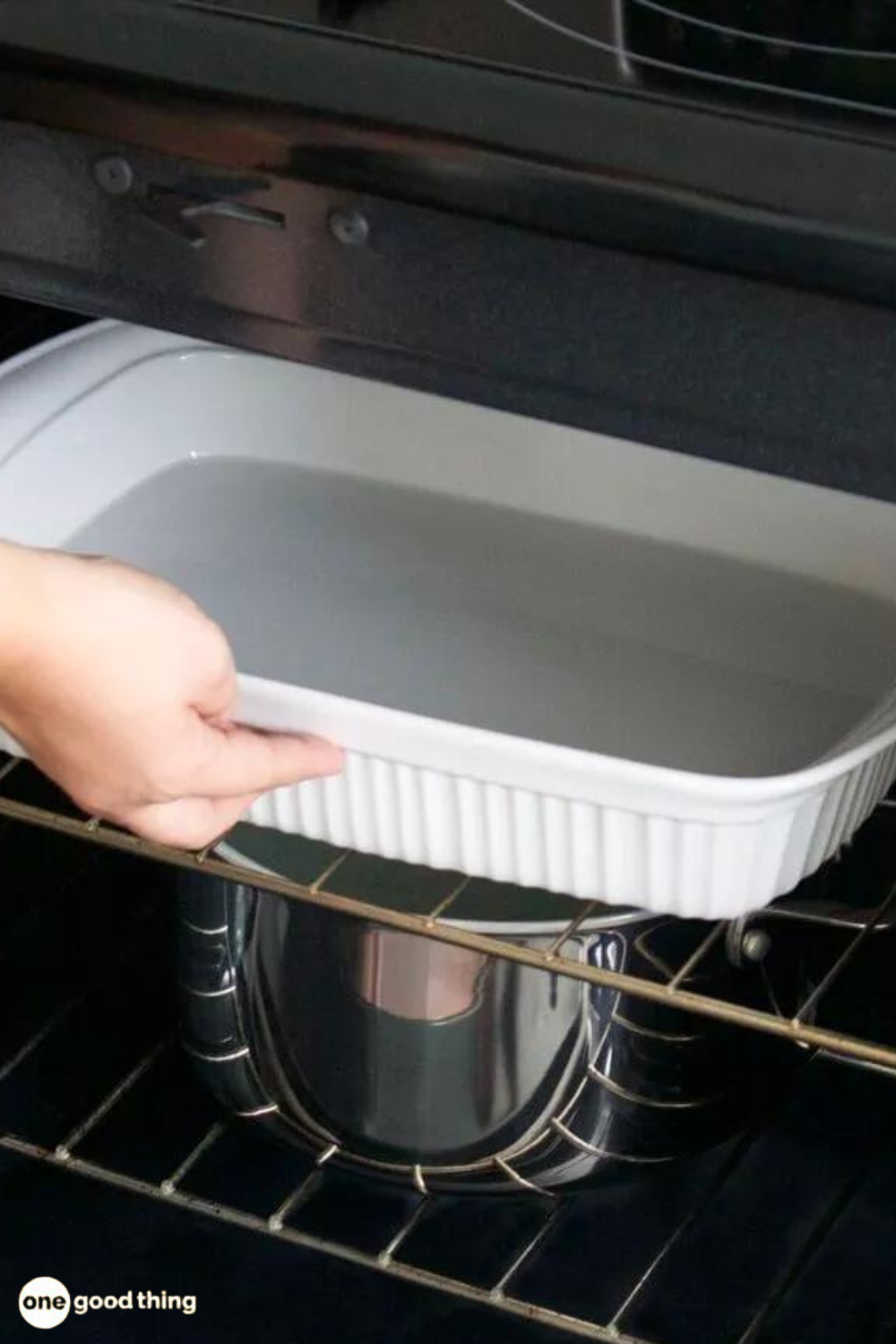
- Do a Monthly Steam Clean: About once a month, I place an oven-safe dish with a cup of water and a sliced lemon inside. I’ll heat the oven to 250°F for about 30 minutes, then turn it off and let it sit for another hour. The steam loosens any fresh grime, and a quick wipe-down is all it needs!
How to Clean Your Oven Racks
While your oven is cleaning overnight, it’s the perfect time to tackle those greasy racks! The easiest and most effective way to clean them (also without harsh fumes) is by letting them soak in the bathtub with a bit of dish soap and a dishwasher tablet.
This method dissolves the baked-on gunk with almost no scrubbing. You can find the full, step-by-step instructions in my post on how to clean dirty oven racks.
Your Questions About Natural Oven Cleaning Answered
I get so many questions about this natural oven cleaning method, so I wanted to pull the most common ones together in one place for you. My hope is that this will help you feel completely confident before you even start mixing up your paste!
How often should I be doing this?
Honestly, there’s no single right answer for everyone. I usually recommend a deep clean like this two to four times a year, depending on how much you use your oven.
If you notice smoke or a burnt smell when you turn it on, that’s a pretty sure sign it’s time!
Can I use this method on a self-cleaning oven?
I strongly advise against it. The baking soda paste can get into the mechanisms and damage the special coating used for the self-clean cycle. For those models, it’s always best to stick to the manufacturer’s instructions.
What if you see a white, chalky film left behind after cleaning? Don’t panic! That’s just a little bit of baking soda residue that didn’t get wiped away. A quick spritz with white vinegar followed by a final wipe with a damp cloth will take care of it and leave a beautiful shine.
Are there extra ingredients I can add?
Some people ask about adding extras like salt for more scrubbing power or essential oils for scent. I find it’s best to keep it simple—the basic paste works wonders on its own without any additions.
Baking soda truly is a powerhouse cleaner all by itself. In fact, there are so many surprising uses for baking soda all around the house, from deodorizing your fridge to brightening your laundry. It’s one of the most versatile and affordable items in my cleaning arsenal.
How often do you clean your oven?